

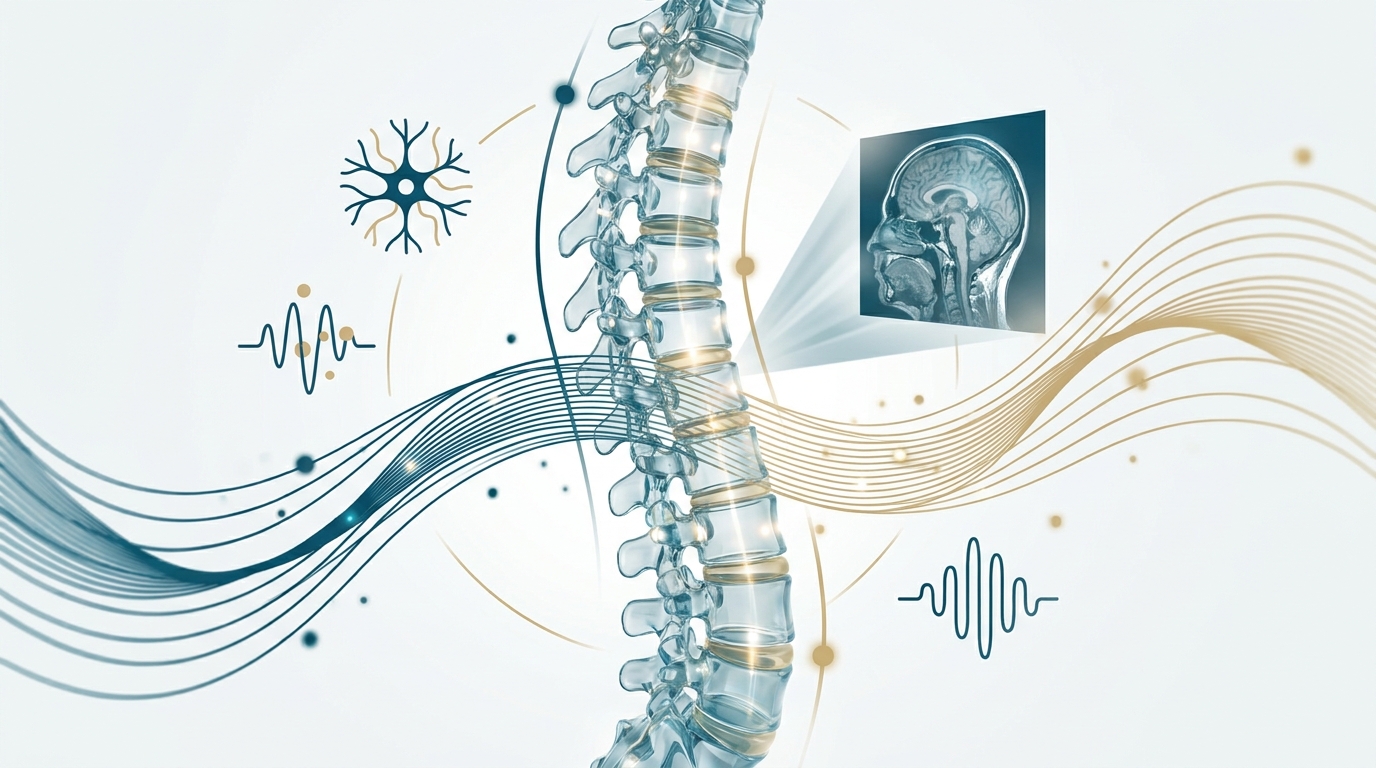
What is chronic back pain?
Back pain is generally described as chronic when symptoms in the back persist for more than three months or keep recurring. Unlike acute pain, which usually has a clear cause and subsides after a short time, chronic back pain often develops its own dynamic – the pain memory can take on a life of its own, meaning that symptoms may continue even after the original cause has long since healed.
People of all ages can be affected, but adults between 40 and 65 years are most commonly impacted. The consequences range from restricted movement and sleep disturbances to psychological strain and social withdrawal.
Common causes of back pain
The causes of chronic back pain are varied and often cannot be attributed to a single factor. Doctors distinguish between specific and non-specific back pain.
Specific causes
With specific back pain, a concrete structural or organic cause can be identified. These include:
- Herniated and bulging discs
- Wear and tear of the facet joints (spondylarthrosis)
- Narrowing of the spinal canal (spinal stenosis)
- Vertebral fractures, for example due to osteoporosis
- Inflammatory conditions such as ankylosing spondylitis
- Rarely: tumours or infections of the spine
Non-specific causes
In the majority of patients, no clear structural cause can be identified. In these cases, several factors usually interact:
- Muscular tension and poor posture
- Lack of movement and one-sided strain, for example from long hours of office work
- Stress, psychological strain and lack of sleep
- Excess weight
- Unfavourable ergonomic conditions at the workplace
Research shows that psychosocial factors – such as work-related pressure, depressive moods or anxiety – can have a considerable influence on the development and persistence of chronic back pain.
How is chronic back pain diagnosed?
A careful diagnosis is the basis of any successful treatment. It typically involves several steps.
Medical history and physical examination
During the consultation, the doctor takes the medical history: when does the pain occur, how does it feel, and is there radiating discomfort in the legs or arms? Psychosocial aspects and the impact on everyday life are also recorded. This is followed by a physical examination including mobility tests, a neurological assessment and an evaluation of the muscles.
Imaging procedures
Depending on the suspected cause, imaging examinations may be useful as a supplement:
- X-ray to assess bony structures
- Magnetic resonance imaging (MRI) to visualise discs, nerves and soft tissues
- Computed tomography (CT) for specific questions
Important to know: imaging findings do not always correlate with the intensity of pain. People without symptoms may, for example, also show disc changes.
Further investigations
If there are indications of inflammatory or systemic causes, laboratory tests, neurological tests or an electrophysiological examination of nerve function may be added.
Multimodal treatment approaches
As chronic back pain is usually based on an interplay of physical, psychological and social factors, a multimodal treatment approach is today regarded as a sensible standard. Various treatment components are combined.
Exercise therapy and physiotherapy
Targeted movement is a central pillar of treatment. Studies show that active measures often work better than prolonged rest. These include:
- Physiotherapy and equipment-assisted training therapy
- Back schools with education on back-friendly behaviour
- Gentle endurance and strengthening exercises such as swimming, walking or yoga
Drug-based therapy
Medication can help to relieve pain in the short term and make movement possible again. Depending on the findings and following medical assessment, anti-inflammatory pain relievers, muscle-relaxant agents or substances for treating neuropathic pain may be used. Longer-term use should always be medically supervised.
Interventional pain therapy
If conservative measures are not sufficient, targeted pain therapy procedures may be considered as a supplement, for example:
- Infiltrations at facet joints or nerve roots
- Trigger point treatments for muscular tension
- Infusion therapies for pain relief
These procedures are tailored to individual findings and form part of an overall concept.
Psychological and psychotherapeutic support
As chronic pain affects both the nervous system and the psyche, psychological co-treatment is helpful in many cases. Methods such as cognitive behavioural therapy, relaxation techniques (for example progressive muscle relaxation or mindfulness training) and pain coping training can sustainably improve how patients deal with pain.
Complementary procedures
Methods such as acupuncture, manual therapy or osteopathic treatment are often used as a supplement. They may provide supportive benefit for some patients, but do not replace basic medical treatment.
Pain therapy: what to look for when choosing a provider
Anyone looking for suitable pain therapy should pay attention to a number of aspects:
- Experience in the treatment of chronic pain
- Availability of a multimodal treatment concept
- Sufficient time for a thorough initial consultation
- Transparent information about treatment options, benefits and possible risks
- Interdisciplinary cooperation with physiotherapy, psychology and other specialist fields
Good pain therapy aims not only at short-term relief, but at a sustainable improvement in quality of life.
What patients can do themselves
In addition to medical treatment, those affected can contribute significantly to the success of therapy:
- Integrate regular, moderate movement into everyday life
- Interrupt long periods of sitting with short movement breaks
- Pay attention to restful sleep and a balanced daily rhythm
- Recognise sources of stress and use relaxation techniques in a targeted way
- Seek medical advice early in the case of persistent symptoms
Conclusion
Chronic back pain is a complex condition with physical, psychological and social components. A careful diagnosis and an individually tailored, multimodal treatment concept form the basis for a noticeable and lasting improvement. Those who become active early and rely on a combination of exercise, targeted pain therapy, psychological relief and medical support have a good chance of breaking the cycle of pain and protective posture.
This article does not replace medical advice.