

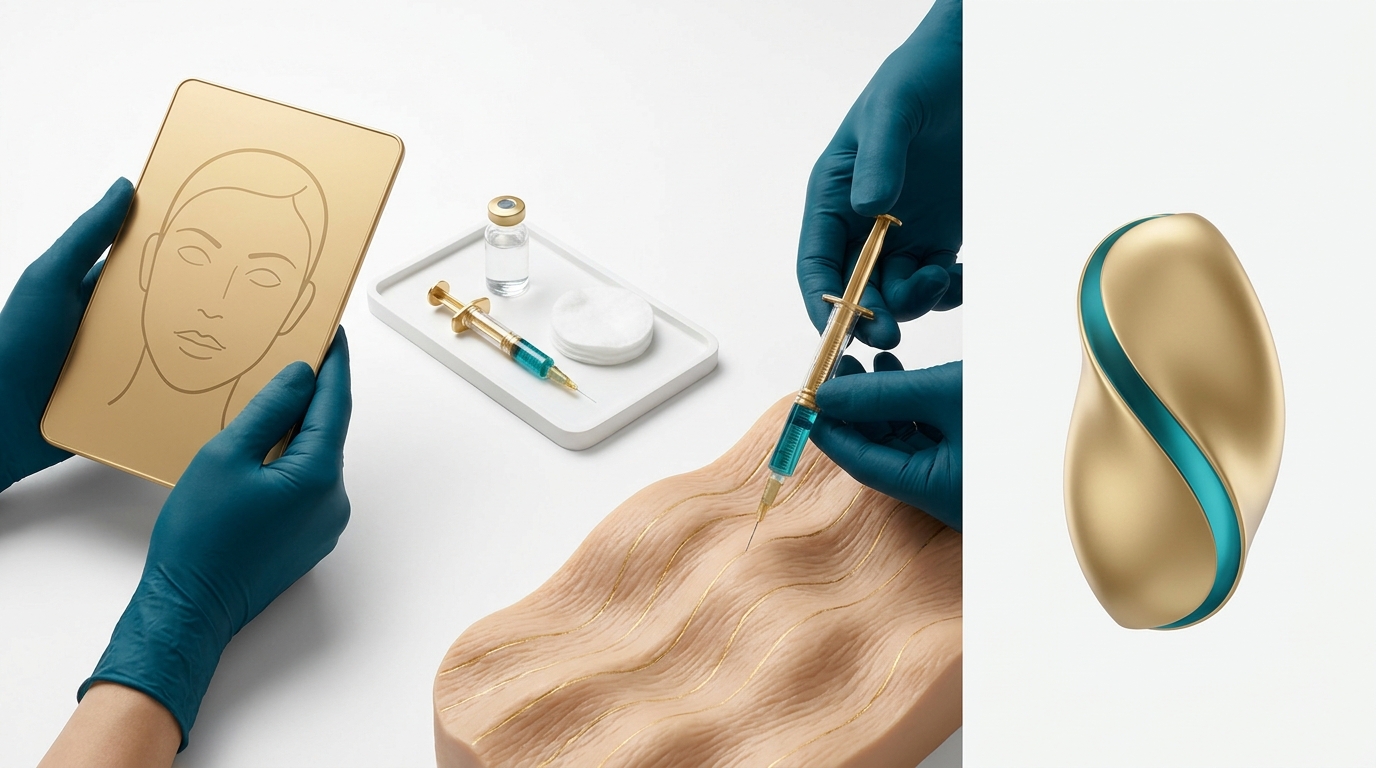
Wrinkle treatment with botulinum toxin: what to expect
Botulinum toxin type A is one of the most frequently used active substances in aesthetic medicine. Particularly in the case of so-called expression lines – such as frown lines, forehead lines or crow's feet – treatment may help to smooth the appearance of the skin. However, many people who are interested know little about the actual procedure of a botulinum toxin treatment in Vienna or in other Austrian cities. This article describes the typical course of a wrinkle injection step by step – objectively, realistically and without promises.
How does botulinum toxin work?
Botulinum toxin type A is a protein that temporarily inhibits signal transmission between nerve and muscle in a targeted way. The treated muscle areas relax, which can make expression-related wrinkles appear less pronounced. The effect sets in after a few days and usually lasts three to six months. The body then breaks the substance down completely.
Important: botulinum toxin acts primarily on dynamic wrinkles, i.e. those caused by facial expressions. Deep static wrinkles or loss of volume are treated using other methods.
Step 1: The initial consultation
A reputable botulinum toxin treatment always begins with a thorough consultation. The initial discussion typically covers:
- individual wishes and expectations
- medical history (e.g. neuromuscular disorders, allergies)
- current medication (especially blood thinners)
- pregnancy or breastfeeding
- previous aesthetic treatments
The doctor analyses your facial expressions, assesses the skin quality and explains which results are realistic – and which are not. Possible side effects, risks and costs are also discussed openly. In Austria, written information and consent are mandatory.
When a treatment may be advised against
In some cases, treatment is not suitable, for example with:
- pregnancy and breastfeeding
- certain neuromuscular disorders (e.g. myasthenia gravis)
- acute skin infections in the treatment area
- known hypersensitivity to the active substance
Step 2: Preparing for the treatment
Once the decision has been made to proceed, the preparation begins – often directly after the consultation or at a later appointment. The most important steps:
- thorough cleansing and disinfection of the skin
- removal of make-up
- marking of the injection points, often while seated so that facial expressions can be properly assessed
- if needed, application of a numbing cream or cooling
Most patients find the injections well tolerated, so additional anaesthesia is often not required.
Advice before the appointment
To reduce the risk of small bruises, the following is often recommended:
- avoid alcohol for 24 to 48 hours before treatment
- take blood-thinning painkillers (e.g. acetylsalicylic acid) only after consultation
- discuss herbal products such as ginkgo or high-dose vitamin E in advance
Step 3: The injection
The actual wrinkle injection is performed with very fine needles. The doctor places several small injections into the previously marked muscle areas. Typical treatment areas in the upper third of the face are:
- frown line between the eyebrows (glabella)
- horizontal forehead lines
- crow's feet at the sides of the eyes
The treatment usually takes between 10 and 20 minutes. During the injection, a slight pulling or pressure sensation may occur. Pain is generally minor and short-lived.
Step 4: Immediately after the treatment
After the injections, small wheals, redness or slight swelling may be visible. These usually subside within a few hours. Occasionally, small bruises may form, which can be covered with make-up.
For the first few hours after treatment, the following is usually recommended:
- do not massage or rub the treated area
- keep an upright posture for about four hours
- avoid intense facial expression exercises – gentle facial movement is fine
- avoid sport, sauna, solarium and hot baths on the day of treatment
- ideally do not apply make-up on the same day
Step 5: Onset of effect and result
The effect of botulinum toxin type A develops gradually. The typical timeline:
- after 2 to 3 days: first visible change
- after about 7 to 14 days: full result
- after 3 to 6 months: the effect slowly wears off
The individual duration of effect depends on factors such as metabolism, musculature, dosage and lifestyle. Some patients notice that the interval between treatments can lengthen with repeated use, as the treated muscles become less active.
Step 6: The follow-up check
A follow-up appointment is often offered about two weeks after treatment. This is used to check whether the result is symmetrical and meets expectations. If necessary, small adjustments can be made. This follow-up check is an important part of a careful botulinum toxin treatment in Vienna and in other practices.
Possible side effects
As with any medical procedure, side effects can occur. Common ones include:
- temporary redness, swelling or small bruises
- mild headaches in the first few days
- a temporary feeling of tightness
Less commonly, temporary asymmetry, a feeling of heavy eyelids or a slightly drooping eyelid may occur. Such effects usually resolve completely within a few weeks. Sound anatomical knowledge and a precise injection technique help to minimise the risk.
Botulinum toxin procedure at a glance
In summary, the typical botulinum toxin procedure consists of the following phases:
- detailed initial consultation and information
- preparation and marking of the injection points
- injection with fine needles
- behavioural advice for the first few hours
- gradual onset of effect within 1 to 2 weeks
- follow-up check and, if necessary, fine adjustment
What characterises a reputable treatment
You can recognise careful treatment by, among other things:
- performance by a doctor and thorough information
- realistic, individually tailored recommendations
- transparent information on the active substance, dosage and costs
- sufficient time for questions
- clear information on the risks and limits of the method
Botulinum toxin is a prescription medicine and may only be administered by doctors in Austria.
Conclusion
A wrinkle treatment with botulinum toxin type A is an established procedure in aesthetic medicine that, when used appropriately, can be well tolerated. Those who understand the botulinum toxin procedure and seek comprehensive advice will enter the treatment better informed. What matters are a trustworthy consultation, realistic expectations and experienced medical care – before, during and after the treatment.
This article does not replace medical advice.