

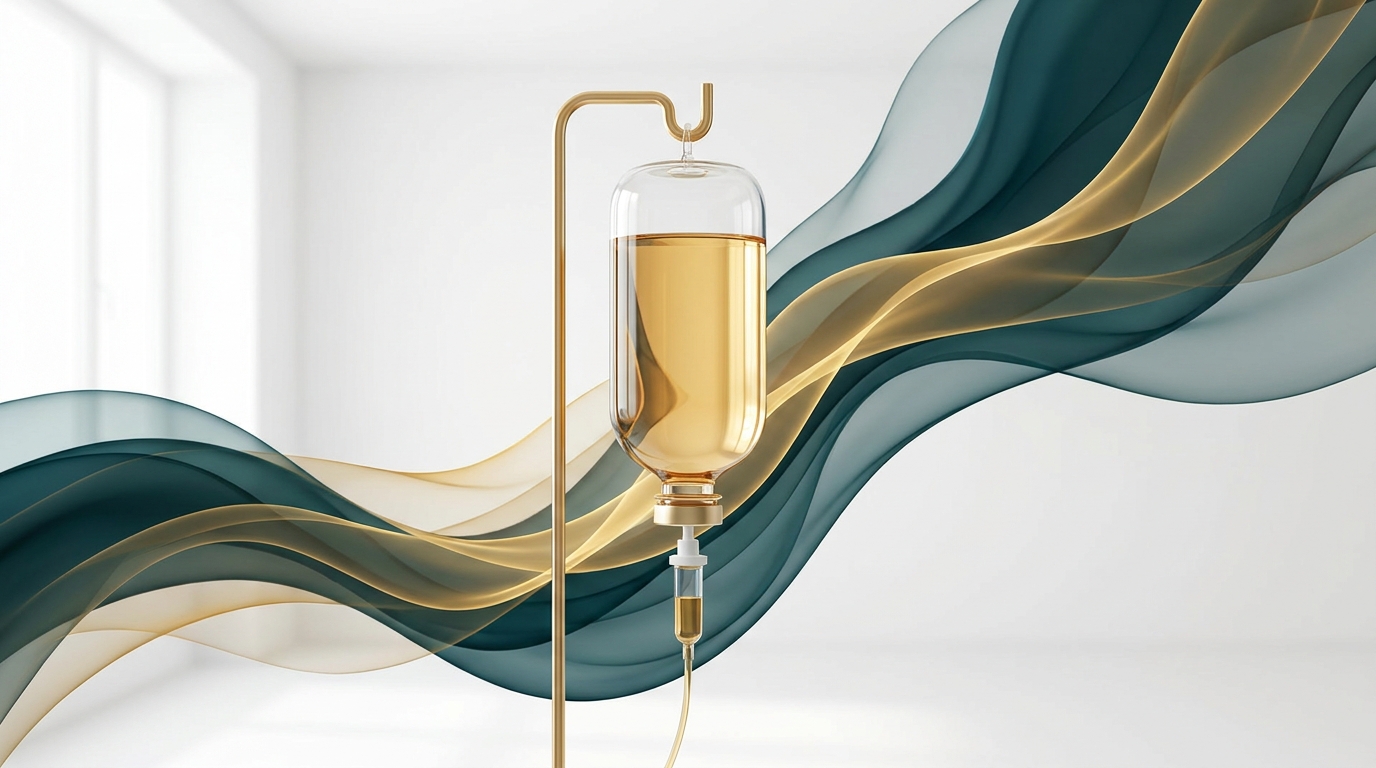
What is infusion therapy?
In infusion therapy, fluids, medicines or micronutrients are delivered directly into a vein through a thin plastic tube. The advantage over tablets or capsules: the active substances enter the bloodstream immediately and do not first have to pass through the gastrointestinal tract. This can improve absorption and is particularly helpful when reliable and consistent delivery is desired.
In a private medical practice, infusion therapy is used as a complementary measure – that is, alongside a medical diagnosis and an individually tailored treatment plan. It does not replace established therapies but can usefully support them.
Infusion applications: when can an infusion be useful?
The areas of application for infusion therapy are wide-ranging. Whether and which form of infusion is suitable is decided by the treating doctor following a thorough examination and medical history. Possible areas of application include:
- Supportive pain management: for example, in chronic back or neck complaints, headaches or migraine attacks
- Exhaustion and recovery: as supportive care after infections or in cases of prolonged fatigue
- Fluid and electrolyte balance: for example, when fluid intake has been insufficient or after intense physical exertion
- Micronutrient infusions: in cases of verified deficiencies of certain vitamins or trace elements
- Support during sporting exertion: to support recovery after intense training or competitions
- Supportive therapy for rheumatic complaints or other chronic conditions, where medically indicated
Important: an infusion is not a cure-all. It may help to ease symptoms and complement other measures, but it is no substitute for a balanced diet, sufficient exercise or medical treatment aimed at the underlying cause.
Infusion therapy procedure: step by step
Many patients are unsure what to expect during an infusion. In fact, it is a well-established procedure that is usually straightforward and largely painless. The typical procedure looks like this:
1. Medical consultation and examination
Every infusion therapy is preceded by a detailed consultation. The doctor takes the medical history and reviews current complaints, pre-existing conditions, allergies and any medications being taken. If necessary, additional examinations such as a blood test are carried out to determine your individual needs and to rule out possible risks.
2. Information and consent
You will receive clear information about:
- the goal and content of the planned infusion
- the likely benefit
- possible side effects and risks
- alternatives to the treatment
Only after your express consent will the actual therapy begin.
3. Preparation
You take a seat in a comfortable chair or lie down on a couch. The area of skin – usually in the crook of the elbow or on the back of the hand – is disinfected. The medical staff then place a thin indwelling cannula into the vein. The brief puncture feels like a slight pinprick.
4. Administration of the infusion
The infusion fluid drips slowly and in a controlled manner through a tube into the vein. Depending on the composition and indication, an infusion takes between roughly 20 minutes and several hours. During this time, you can relax, read or rest. The medical staff regularly check on your well-being and the drip rate.
5. Post-treatment observation
Once the infusion is complete, the cannula is removed and the puncture site is briefly compressed to prevent a small bruise. In most cases, you will remain in the practice for a few more minutes so that any reactions can be noticed in good time. After that, you can usually leave the practice without restriction.
What patients should consider before and after the infusion
To make the treatment as comfortable as possible, a few simple tips help:
- Before the infusion: have a small meal and drink enough water. An empty stomach can increase the risk of circulatory problems.
- Comfortable clothing: loose-fitting tops make it easier to access the arm vein.
- Bring a list of medications: a current overview of all preparations you take – including food supplements – helps ensure safe treatment planning.
- After the infusion: rest the arm briefly and keep an eye on the puncture site. If you experience more severe pain, swelling or skin changes, seek medical advice.
- Drink enough fluids: drinking sufficient water after the treatment also supports your metabolism.
Possible side effects
When carried out correctly, infusion therapy is a safe procedure. As with any medical measure, side effects can still occur. These include, among others:
- slight redness, bruising or a feeling of pressure at the puncture site
- a temporary sensation of warmth or cold during the infusion
- rarely, circulatory reactions such as dizziness or nausea
- in very rare cases, allergic reactions to individual components
Your doctor will discuss possible risks with you individually beforehand.
Private medical infusion care in Austria: what does it mean?
In Austria, infusion therapies can be obtained both from doctors with a health insurance contract and from private (Wahlarzt) doctors. Private doctors do not have a contract with the statutory health insurance. Patients first pay for the service themselves and can subsequently submit the invoice to their health insurance fund. A portion of the costs is usually reimbursed – the exact amount depends on the respective tariff and the treatment.
Advantages frequently associated with private medical care include:
- longer and individually arranged appointments
- flexible scheduling with shorter waiting times
- sufficient time for detailed information and consultation
Whether an infusion makes sense and whether the therapy is suitable for you personally can only be clarified in a direct consultation. Do not hesitate to raise any open questions – including about costs, possible alternatives and expectations regarding the treatment outcome.
Conclusion
Infusion therapy is a versatile procedure that can be used as a complementary measure in a private medical practice for a variety of complaints. A clearly structured procedure, careful information and individual adaptation to the situation all help patients feel well looked after during treatment. The key point remains: an infusion is part of an overall concept and not a substitute for a medical assessment that addresses the underlying cause.
This article does not replace medical advice.